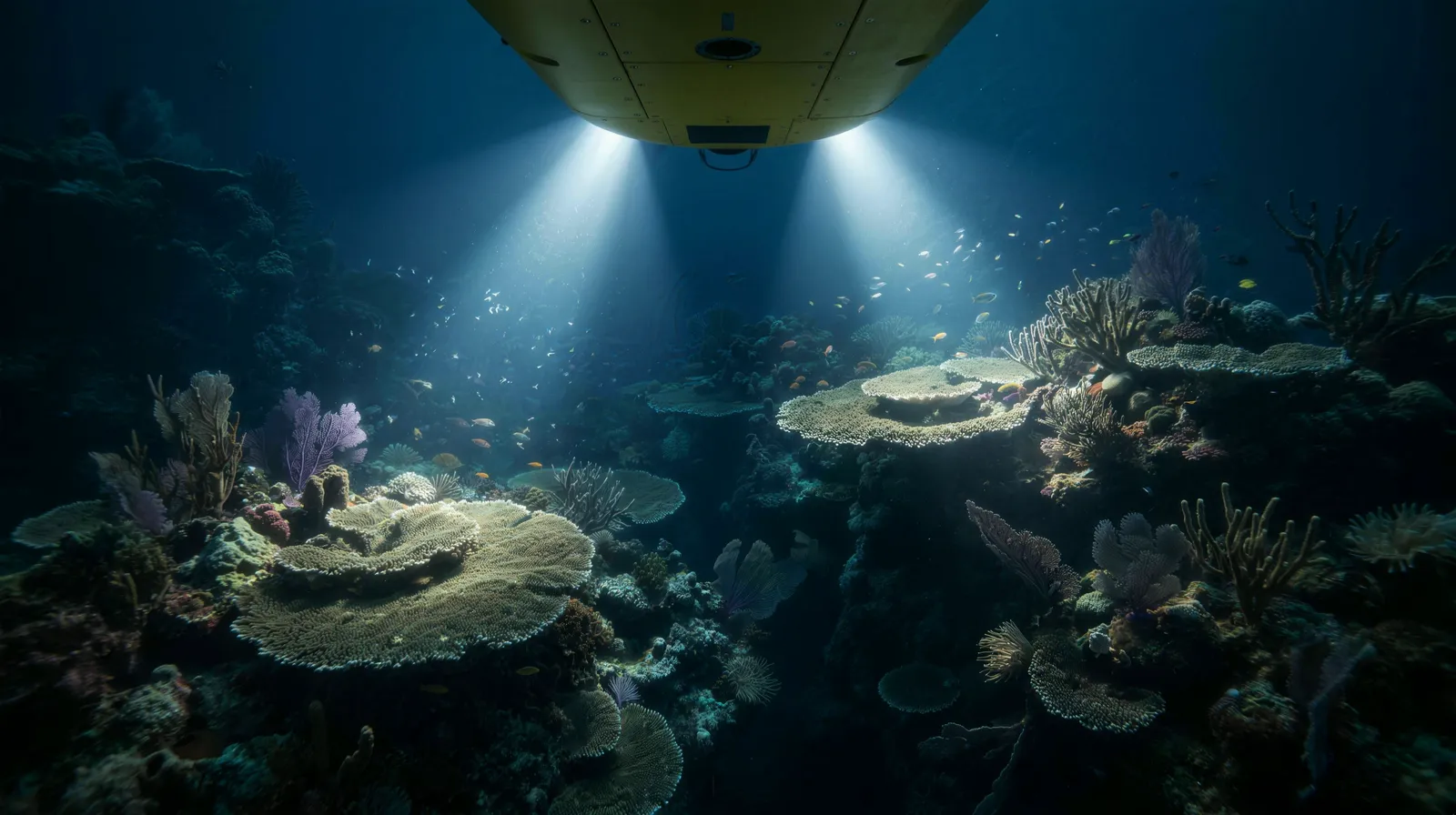
The seabed seen from a camera under an AUV: two lamp beams light up coral and small fish, and the vehicle's yellow hull fills the top of the frame.

Jules Berhault

Marine Robotics Engineer · Technology Innovation Institute, Abu Dhabi

About

Marine robotics engineer specializing in autonomous surface and underwater vehicles, with experience spanning perception, control, sensor fusion and multi-robot coordination for defense and maritime applications. Currently developing autonomous maritime systems at the Technology Innovation Institute in Abu Dhabi.

Role
Senior Engineer, Marine Robotics · TII
Base
Abu Dhabi, UAE 24°27′N 54°23′E
Surface · USV
9 m outboard · 17 m dual waterjet · 17 m autonomous catamaran · DriX H-8
Subsea · AUV
4 m X301, teleoperated offshore
Ground · UGV
Research platforms at ENSTA Paris
Languages
French English Spanish

Projects

Vessels and systems taken from concept to sea at the Technology Innovation Institute and ENSTA Paris.

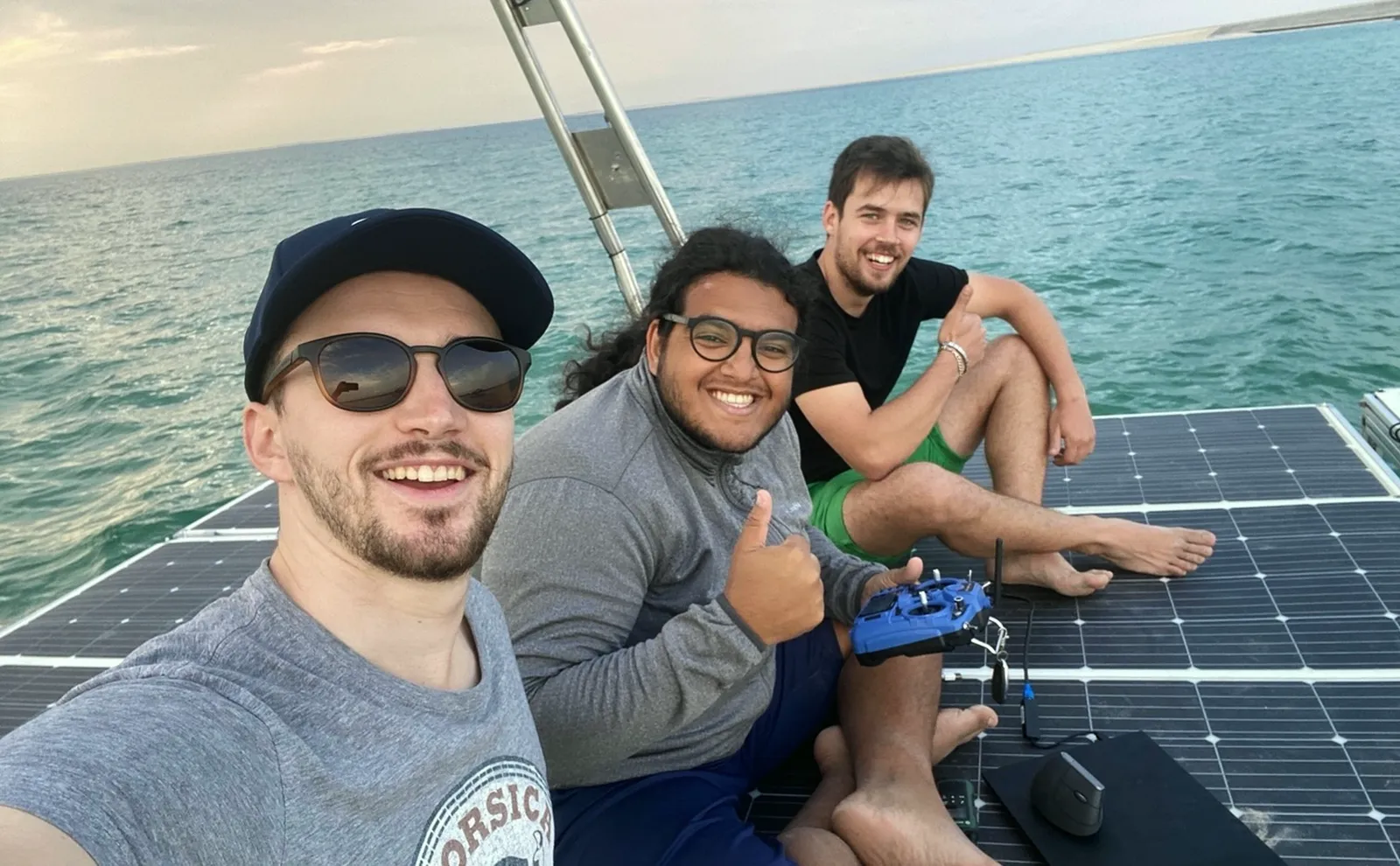
Jules and two colleagues sitting on the roof of the first USV the team built, a remotely piloted boat.
First USV, remote-piloted · Jan 2023

Unmanned surface vehicles: from remote operation to autonomy

Technology Innovation Institute · Abu Dhabi · 2023 to present

  • Took a 9-metre outboard-engine USV, fitted with GNSS, INS, speed log, EO/IR and LiDAR, from remote operation to autonomy.
  • Did the same on a 17-metre, 1,800 hp dual-waterjet USV and added obstacle avoidance, with GNSS, INS, LiDAR, radar and EO/IR in one autonomy stack.
  • Engineered perception and decision-making for reliable obstacle detection and safe navigation under high-level human supervision.
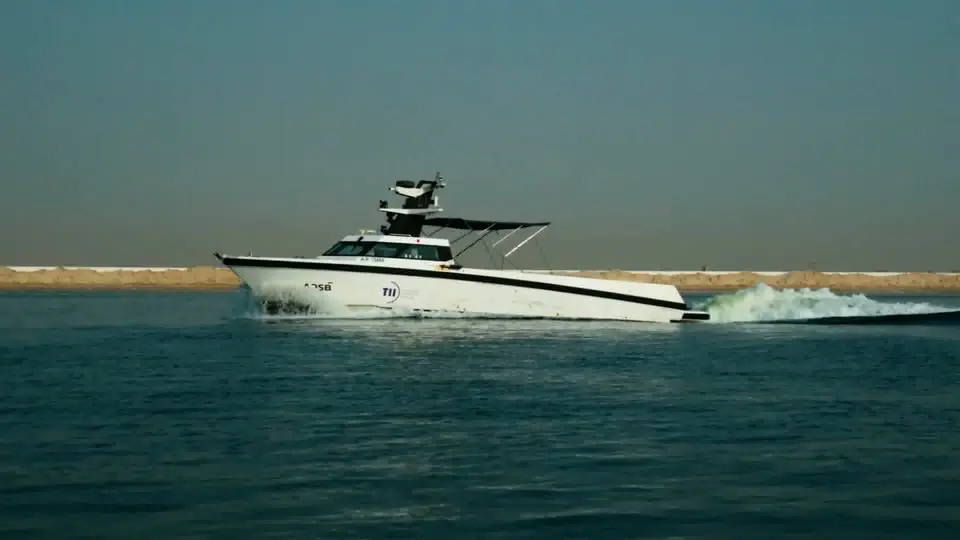
The 17-metre Detector USV running at speed along the coast, its waterjet wake building behind it.

170 M-Detector

Length
17.4 m
Beam
4.2 m
Draft
0.85 m
Crew
0, or 4 manned
Engines
2 × 900 hp diesel
Drive
2 × waterjets
Electric
4 h at 5 kt, silent
Payload
Up to 1,000 kg

Autonomy suite

  • INS
  • Speed log
  • DVL
  • FLS · SeapiX
  • EO/IR
  • Radar
  • LiDAR
  • Radio
  • 4G
  • Starlink

Footage: 170 M-Detector, Abu Dhabi Ship Building with TII and Exail. Data: EDGE Group.
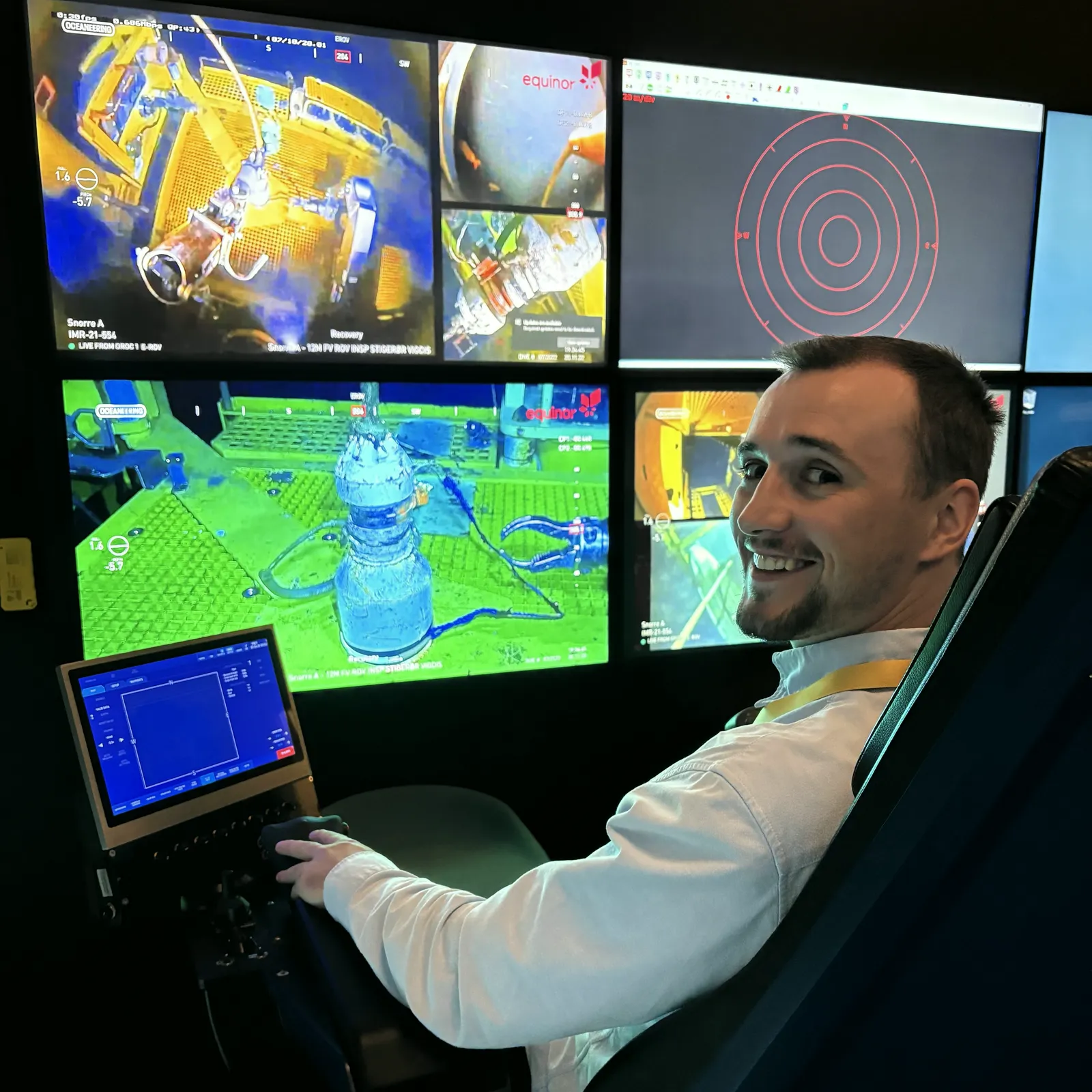
Jules trying out a ground control station seat at the Oceaneering facility in Stavanger, Norway.
Ground control station · Oceaneering, Stavanger · Mar 2026

17-metre autonomous catamaran, from concept to integration

Technology Innovation Institute · 2023 to present

  • Involved from the very first concept to final integration of an aluminium catamaran USV built to carry a 20-foot container, with a French naval architect and a shipbuilder in China.
  • Designed for full autonomy and long-range offshore navigation, in compliance with COLREGs (International Regulations for Preventing Collisions at Sea).
  • Designed the sensor suite enabling full autonomy at sea; the first unit is scheduled for delivery in 2027.
Length
17 m LOA
Hull
Catamaran, aluminium
Payload
One 20 ft container
Autonomy
Full, COLREGs-compliant
Range
Long-range, offshore
Delivery
First unit, 2027
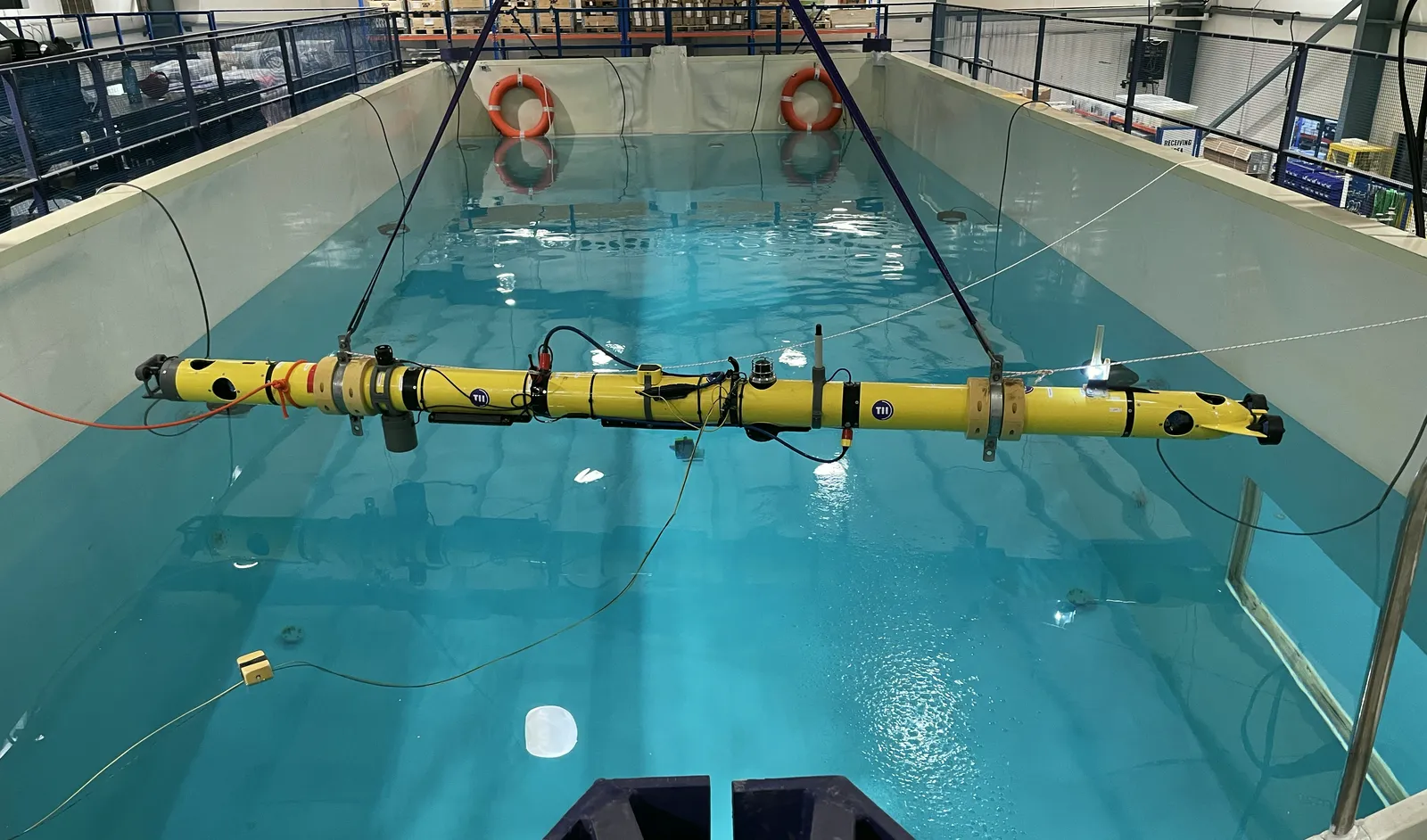
The X301 AUV, a modified GraalTech X-300, being lowered into the indoor test pool at TII.
X301 into the test pool · Jan 2026
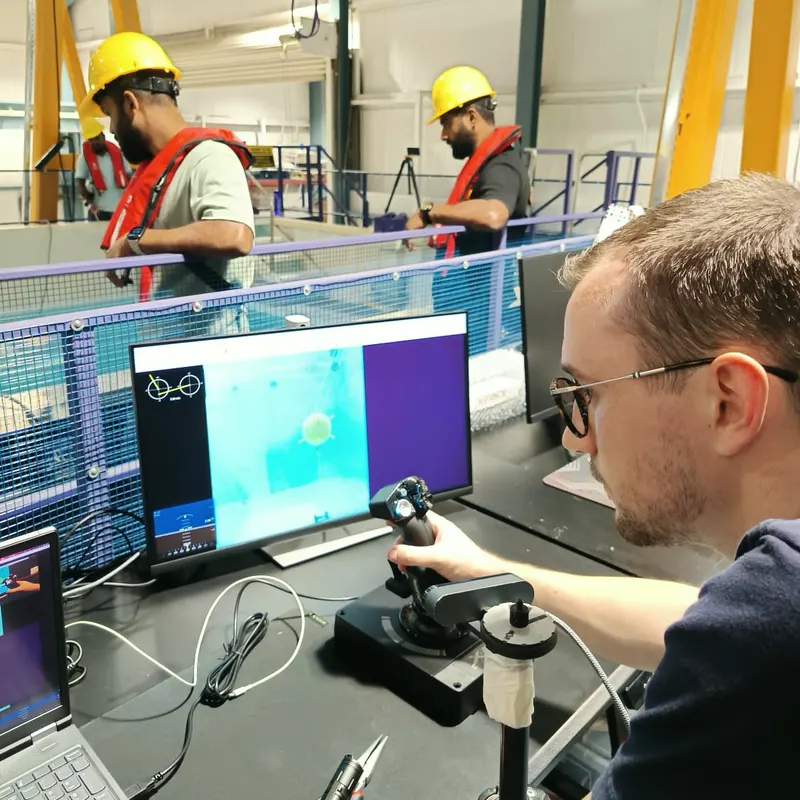
Over-the-shoulder view of Jules remotely controlling the X301 AUV while preparing it for a three-day mission at sea.
Remote operation · Jan 2026

Autonomous underwater vehicle: teleoperated offshore

Technology Innovation Institute · 2025

  • Adapted a modified GraalTech X-300 AUV platform, integrating forward-looking sonar (FLS) and a front-facing camera for underwater perception and obstacle avoidance.
  • Teleoperated the 4-metre AUV offshore for data acquisition, with remote control and monitoring for subsea inspection and navigation.
Platform
X301, modified GraalTech X-300
Length
4 m
Perception
Forward-looking sonar, front camera
Mission
Offshore data acquisition
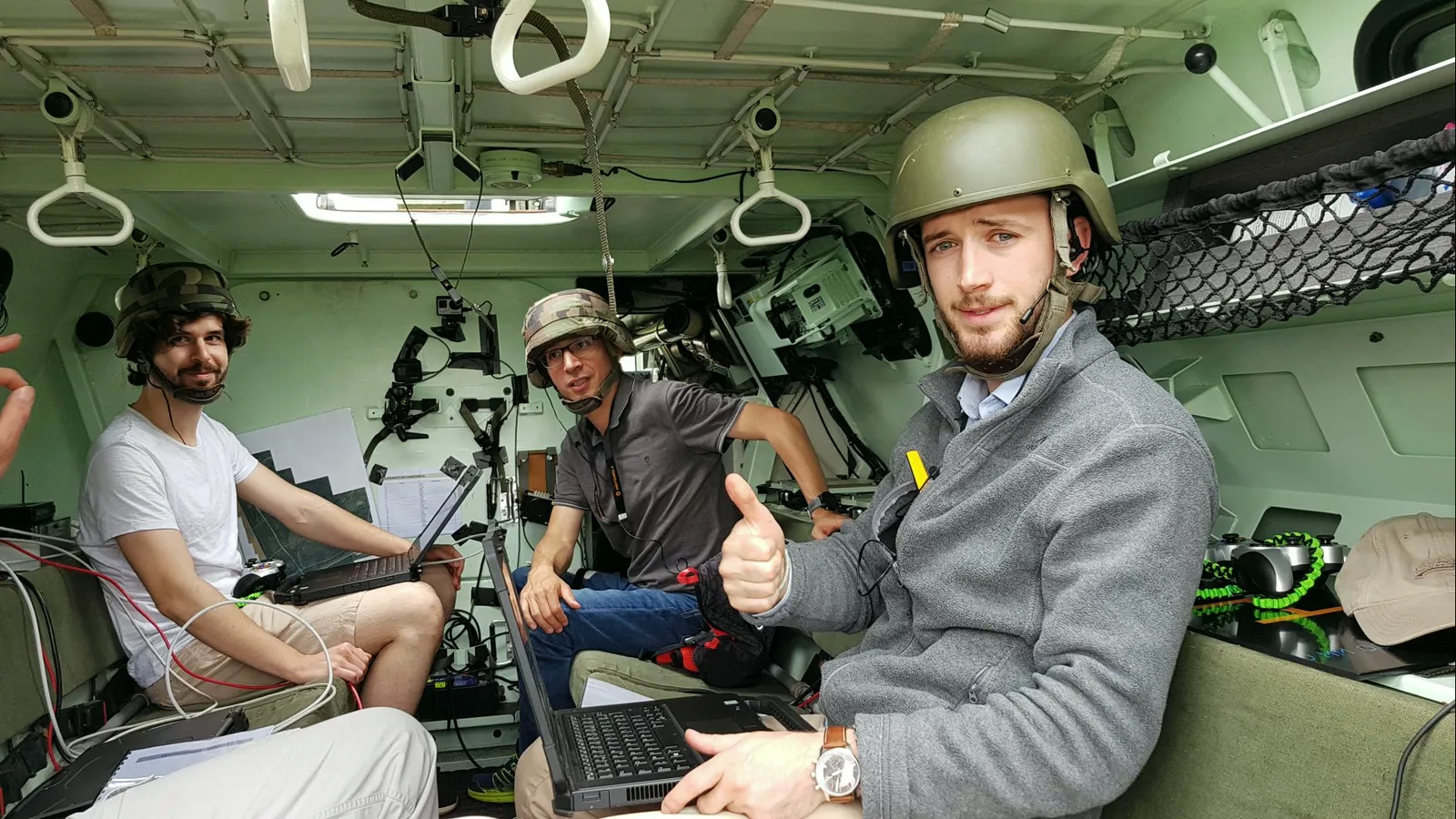
Jules and two colleagues sitting in a French Army armored vehicle during the CoHoMa challenge.
CoHoMa challenge · Jun 2022

Challenge CoHoMa 2022: multi-robot collaborative reconnaissance

ENSTA Paris, Polytechnic Institute of Paris · 2022

  • Took part in the CoHoMa challenge, organized by Battle Lab Terre and endorsed by the French Army's Task Force Vulcain, on human-machine collaboration in reconnaissance missions.
  • Designed and built a custom human-machine interface from scratch, letting a single operator monitor and coordinate multiple robots (UGV, UAV) simultaneously in the field.
  • Contributed to deploying the multi-robot reconnaissance system in realistic combat scenarios.
  • Award · Human-Machine Interface
  • Award · Combative Spirit
Illustration · synthetic IR view, 640 × 512
Side view: a camera 2 metres above the water sees the horizon slightly below level and a target's waterline further below; the angle between the two, measured in pixels, gives the range d. h level horizon (dip) γ d = h / tan(dip + γ) waterline
The gap in pixels between horizon and waterline gives γ (γ = Δpx × VFOV / image height); with the camera height and the horizon dip, that gives range.

Obstacle detection and tracking from a single camera

Exail, robotics division · Toulon · 2021

  • Worked on the Maritime Detection and Tracking system for the DriX H-8 USV: a convolutional neural network finds obstacles and the horizon in one infrared camera's images.
  • The water surface is the reference. The pixel gap between the horizon and a target's waterline, with the camera's height and field of view, gives its range; its position across the image gives its bearing. Kalman-filter fusion feeds obstacle avoidance.
  • Quantified the error sources (one pixel of horizon error shifts a target at 300 m by about 50 m), added heave compensation from the INS, and corrected the case where the coastline is mistaken for the horizon.
  • Rewrote the chart-based distance-to-coast ray tracing from 70 ms to 0.012 ms, and interfaced the system with ArduPilot through MAVROS as a proof of concept.
Platform
DriX H-8 USV
Sensor
One infrared camera
Ranging
Horizon-referenced, from pixel gap
Stack
ROS, CNN, Kalman filter

Read the full report PDF, in French

Experience

  1. Senior Engineer, Marine Robotics

    Technology Innovation Institute (TII)

    Abu Dhabi, UAE · 24°27′N 54°23′E · Jan 2023 to present

    • Developed both USVs and AUVs for diverse applications, including autonomous water transport, defense, and AUV launch and recovery operations.
    • Focused on integrating advanced perception systems to improve situational awareness and autonomy.
    • Played a key role in advancing innovative solutions for autonomous maritime systems.
  2. Research Engineer, Autonomous Robotics

    ENSTA Paris, Polytechnic Institute of Paris

    Paris, France · 48°51′N 2°21′E · Dec 2021 to Dec 2022

    • Led the development and optimization of academic robotic platforms (UGV, UAV), enhancing research capabilities in autonomous systems.
    • Designed and implemented control and perception systems for autonomous surface and underwater vehicles.
    • Developed a custom HMI from scratch to operate multiple robots in a collaborative reconnaissance mission.
  3. Intern, Marine Robotics

    Exail

    Toulon, France · 43°07′N 5°56′E · Feb 2021 to Aug 2021

    • Contributed to research and development of the CortiX Autonomy system for the DriX program.
    • Worked on obstacle detection and tracking for the DriX H-8 with a single camera, using the water surface's horizon to estimate the bearing and range of obstacles for avoidance.

Education

  1. Advanced Master (A.M.), Autonomous Mobile Robotics

    ENSTA

    Brest, France · 48°23′N 4°29′W · July 2021

    Robotics, neural networks, deep learning and perception for autonomous systems.

  2. M.Sc. Engineering

    ENSTA

    Brest, France · 48°23′N 4°29′W · June 2019

    Mathematics, mechanics, energy, digital sciences and humanities.

Skills

Programming

  • C++
  • Python
  • Bash
  • JavaScript
  • HTML
  • Mermaid

Robotics stack

  • ROS 2
  • Gazebo
  • Linux
  • Docker
  • CUDA

Tools

  • VS Code
  • Claude Code
  • OpenAI Codex
  • Atlassian
  • Office
  • Blender
  • SolidWorks
  • Onshape

Expertise

  • Perception systems
  • Control algorithms
  • Sensor fusion
  • Driver development & documentation

Methods

  • Agile
  • Scrum
  • Test-driven development

Domains

  • Maritime, surface & subsea
  • Terrestrial

Project lifecycle

  1. Concept design
  2. Technical design
  3. Procurement
  4. Fabrication & test